Zhou Enlai: A Man of His Time
Available also in pdf – Download Pdf
Chen Jian, Zhou Enlai. A Life, Cambridge, MA; London, UK: The Belknap Press of Harvard University Press, 2024, 817 pp. ISBN: 9780674659582.
Zhou Enlai (1898-1976), the former Minister of Foreign Affairs and Premier of the People’s Republic of China (PRC), remains widely regarded abroad as one of China’s most respected leaders, renowned for his diplomatic skills and modest lifestyle. His pragmatic approach to diplomacy is often invoked by analysts as a model for navigating the ongoing transition from American unipolarity to a multipolar international order through steady and cautious diplomatic engagement [Nixon Cox, Arnold 2025].
In the PRC, Zhou Enlai’s legacy has seen a revival during the «golden age» of the Belt and Road Initiative (also known as the One Belt One Road, 一带一路, Yidai Yilu). Both official discourse and scholarly works emphasise the continuity between Zhou’s diplomacy – particularly his efforts to expand Beijing’s ties with Asian and African nations and his Five Principles of Peaceful Coexistence (和平共处五项原则, Heping Gongchu Wu Xiang Yuanze) – , and current infrastructural and economic initiatives. His legacy is thus presented as a foundational model for China’s peaceful rise, modernization, and openness [Liu 2024; Xinhua 2024]. On the 120th anniversary of Zhou’s birth in March 2018, Xi Jinping praised him as an exemplar of discipline, responsibility, and dedication, implying that socialism with Chinese characteristics represents a long-term national project aligned with Zhou’s vision [CGTN 2018].
Chen Jian recognises the importance of exploring the complexities of Zhou Enlai’s political career and engaging with key historiographical debates, while refraining from delivering a definitive moral judgment on his political figure. Official Chinese Communist Party’s (CCP) historiography has portrayed Zhou Enlai as a morally exemplary revolutionary, a skilled diplomat, and a moderating force who restrained the most destructive tendencies of Maoist politics, often minimising his involvement in periods of political repression. In recent decades, however, scholars have challenged this narrative. Gao Wenqian’s Zhou Enlai’s Later Years portrayed Zhou as a tragic and compromised figure, suggesting that his unwavering adherence to Party discipline made him complicit in, and an enabler of, the regime’s most destructive campaigns. His survival thus depended on his political submission to Mao Zedong [Gao 2007]. Barnouin and Yu Changgen pushed this argument further, underlining that Zhou was at times punitive, persecuting rivals, betraying comrades, and participating directly in political violence. The popular image of Zhou as a protector is a political myth that conceals his opportunism and cruelty [Barnouin, Yu 2006]. By contrast, Michael Dillon’s biography, while acknowledging Zhou’s personal dilemmas and constraints, presented him more sympathetically as a statesman and moral counterweight to Mao [Dillon 2020].
Chen Jian’s biography moves beyond competing interpretations and tries to present a balanced portrait of a complex political figure. Departing from both the celebratory tone of official historiography and the critical stance of later revisionism, Chen offers a contextual and structurally grounded account of Zhou’s life. Zhou emerges as a skilled political operator, striving to avert catastrophe and limit damage, yet constrained by Party discipline and revolutionary imperatives. Chen’s portrayal, while still sympathetic, remains critical, emphasising Zhou’s political skill but also the contradictions and moral compromises he made to build «New China». Rather than labelling Zhou a hero or villain, Chen focuses on how the CCP leadership functioned under extreme political internal and external pressures, showing a life that embodies both the «constructive results» (p.8) and profound contradictions of the Chinese Revolution.
The biography stands out from earlier works for its impressive length and the rigor of its research. Chen drew extensively on Chinese-language primary sources to reassess even well-studied phases of Zhou’s life. Benefiting from the period of archival openness in the PRC in the late 1990s and early 2000s, he consulted Zhou’s personal writings and correspondence, Politburo and Party records, materials from the Ministry of Foreign Affairs Archives, and numerous provincial archives. Far from being a mere compilation of sources, this exceptional research offers a robust analytical framework for situating Zhou within the succession of revolutions that shaped twentieth-century China, portraying him as both an active agent and a product of these profound political transformations.
The book follows a clear diachronic structure coherent with earlier biographies and is divided into four main parts. The first examines his formative years, which proved pivotal in shaping his political consciousness and career (Part I: Early Years, pp. 11-68). The second focuses on his pre-1949 revolutionary activities and the path that led him and his comrades to the foundation of the PRC (Part II: Making the Revolution, pp. 69-277). The third centres on his role as one of the leading political figures of New China, addressing internal challenges, intraparty disputes, and foreign policymaking (Part III: Building New China, pp. 279-542). The final part is dedicated to the last ten years of his life, marked by the hardships of the Cultural Revolution and its aftermath, as well as Zhou’s achievements on the international stage (Part IV: Surviving the Cultural Revolution, pp. 543-690).
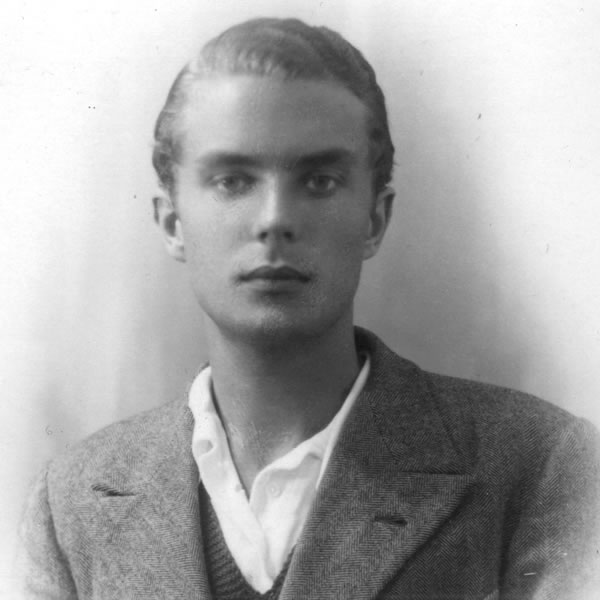
Chen devotes particular attention to Zhou’s early years (1898-1924), demonstrating that he was very much a man of his time – a point reflected in the book’s original working title [Wilson Center 2007]. Zhou’s early trajectory is, in fact, closely intertwined with China’s historical path: the decline of his mandarin family from Jiangsu mirrored the broader disintegration of the imperial order; his restless youth took shape during the late Qing, a period characterised by intense migrations and major social unrest (chapter 1). As a student at what would later become Nankai University in Tianjin, Zhou was shaped by the New Culture Movement and radicalised by Japan’s Twenty-One Demands, which prompted his initial political engagement and fostered his nationalist feelings (chapter 2). Like many contemporaries, he went to Japan, initially seeing it as a model to emulate, but ultimately reflecting critically on its militarism, imperialism, and social inequalities (chapter 3). After returning to Tianjin in 1919, Zhou closely followed the May Fourth Movement and participated in related activities at Nankai (chapter 4). His later decision to sojourn in Germany, the United Kingdom, and France marked a decisive turning point: by the spring of 1922, Zhou had fully embraced communism, becoming deeply involved in the creation of new Communist organizations and embarking on the path of a “professional revolutionary” (p.62).
Part II (Making the Revolution) traces Zhou Enlai’s transformation from a young revolutionary to an indispensable party member during the turbulent years between 1924 and 1949. Chen reconstructs Zhou’s early prominence within the United Front, highlighting his crucial roles at the Whampoa Military Academy and in the National Revolutionary Army, where he gained military and political credibility across the CCP and Guomindang (GMD) (1924-1931, chapter 6). The Shanghai years (1927-1931, chapter 7) represent a critical phase in which Zhou controlled the CCP’s organizational and intelligence networks and consolidated his authority within the Party, even as the United Front rapidly collapsed. From this point onward, Chen places Zhou’s complex relationship with Mao Zedong at the centre of the narrative. During the Jiangxi Soviet period (1931-1934, chapter 8) and the Long March (1934-1935, chapter 9), Zhou’s conduct, particularly at the Zunyi Conference (1935), facilitated Mao’s eventual ascendancy over both the army and the Party. According to Chen, Zhou’s capacity to absorb responsibility, compromise in intraparty conflicts, and manage crises proved essential to the CCP’s survival, but also reinforced his subordinate position within Mao’s emerging authority. The chapters that delve into the Second United Front and the Yan’an Rectification Campaign further stress this dynamic (chapters 9-11): while Zhou played a key role in negotiating with the Guomindang (Chinese Nationalist Party) to sustain cooperation against Japan, he endorsed Mao’s leadership, accepting Maoist orthodoxy as a defining aspect of CCP political culture. By doing so, he secured his political survival and a place within the Party’s inner circle.
Zhou Enlai’s role in the newly founded PRC is examined in Part III (Building New China) through the interconnected lenses of intraparty dynamics, state-building policies, and diplomatic shifts. Chen convincingly argues that Zhou was never a fully internalised Maoist; rather, he enabled and sustained Mao’s agenda out of a belief in compromise and institutional stability. Zhou’s role in key campaigns was characterized by a dichotomy: he was an indispensable senior administrator and diplomat who helped establish consensus, but his influence was consistently curbed when Mao pursued a more radical policy. Chen acknowledges Zhou’s complicity in political tragedies, while stressing the structural limits that reduced him to a policy conveyor rather than a principal decision-maker. Zhou’s pragmatic interventions during periods of crisis, especially in the aftermath of the Great Leap Forward (1958-1960), are framed as efforts to «prevent the vessel from sinking», (pp. 8-9) even as his ultimate loyalty to Mao became indisputable (chapters 15, 17, 19-22). At the same time, the book emphasises Zhou’s comparatively greater autonomy in foreign affairs, where his diplomacy – from the Geneva and Bandung Conferences to managing relations with Moscow, Washington, Pyongyang, New Delhi, and Hanoi – reflected a sustained commitment to anti-imperialism and the nationalist cause, guided by a long-term perspective (see especially chapters 16, 18, 23, 28). On the eve of the Cultural Revolution, Chen portrays Zhou’s alignment with Mao as politically inevitable but personally painful, rooted in the absence of any viable alternative narrative to Mao’s political and ideological dominance (chapter 24).
Part IV (Surviving the Cultural Revolution) examines Zhou Enlai’s final years through unprecedented political chaos. Following Lin Biao’s death, Zhou emerged as China’s de facto second-ranking leader (chapter 25-27): Chen portrays Zhou as aware of the devastation caused by Mao, striving to maintain essential administrative and executive functions, while also supporting Mao’s campaigns and purges, thereby demonstrating a pragmatic, if at times cynical, vision for China’s recovery. At the same time, these years marked Zhou’s greatest diplomatic achievement: the Sino-American rapprochement. It not only altered the dynamics of the Cold War but also reaffirmed his lifelong dedication to diplomacy (chapter 28). Chen underscores the tragedy of Zhou’s final years (chapters 29-30): gravely ill, politically isolated, subjected to renewed criticism and forced self-criticism, and denied timely medical treatment, Zhou’s authority steadily eroded. The leader saw the decline of his political career, embodying the paradox of survival and moral ambiguity that defines Chen’s overall interpretation of Zhou’s life.
Chen presents Zhou Enlai as a profoundly ambivalent figure: both a participant in the CCP’s greatest tragedies and a statesman striving to mitigate their worst consequences. Balancing broad historical analysis with close reconstructions of key episodes, Chen’s detail-rich narrative makes the book engaging even for readers with no prior knowledge of the subject, while maintaining its significance for scholarly research. The biography thus contributes to debates in modern Chinese historiography while offering a compelling narrative of China’s transformations in the first part of the twentieth century. Could Chen’s work be considered the ultimate biography of Premier Zhou? While no single work can claim that status, as opposed to previous biographies of Zhou Enlai, Chen’s provides a more nuanced portrait of the long-time prime minister of the CCP, essential to understanding his life and legacy.
Bibliography
Barnouin, Barbara, & Changgen, Yu, Zhou Enlai: A Political Life, Hong Kong: Chinese University Press, 2006.
Dillon, Michael, Zhou Enlai: The Enigma Behind Chairman Mao, London: I.B. Tauris, 2020.
Gao, Wenqian, Zhou Enlai: the last perfect revolutionary, New York: PublicAffairs, 2007.
Gao Wenqian, 晚年周恩來 (Zhou Enlai’s Later Years), New York: Mingjing Chubanshe, 2003.
Liu, Hong, ‘China engages the Global South: From Bandung to the Belt and Road Initiative’, Global Policy, 13, 1, 2022, pp.11-22.
Nixon Cox, Christopher, & Arnold, James, 2025, 20 October, ‘Will today’s great powers heed the example of Richard Nixon and Zhou Enlai?’, South China Morning Post.
‘World Insights: Five Principles of Peaceful Coexistence — timeless guide for int’l relations’, Xinhuanet, 28 June 2024.
‘Zhou Enlai: A Life’, Wilson Center, 11 June 2024.
‘CPC holds symposium to commemorate late Premier Zhou Enlai’, CGTN, 1 March 2018.
Asia Maior, XXXVI / 2025
© Viella s.r.l. & Associazione Asia Maior
ISSN 2385-2526